I may earn a commission at no extra cost to you. #ad
Free Guide: How to Select the Best Rehabilitation Robot for Spinal Cord Injury Recovery
Jump to Section
- Understanding Robotic Rehabilitation for SCI
- Exoskeletons vs. End-Effector Systems
- Stationary Gait Trainers vs. Overground Robots
- Key Selection Criteria: What to Look For
- The Importance of Clinical Evidence
- Patient-Centric Factors and Compatibility
- The Future of Spinal Cord Injury Robotics
- Frequently Asked Questions
Understanding Robotic Rehabilitation for SCI
Spinal Cord Injury (SCI) recovery is a marathon, not a sprint. Traditional physical therapy is vital, but it often lacks the intensity and volume required to trigger significant neuroplasticity. This is where rehabilitation robots enter the frame. These advanced machines provide the precise, repetitive movements necessary to rewire the nervous system or maintain physical health after a traumatic injury.
Selecting the right robot isn't just about the "cool factor" of the technology; it's about matching the engineering to the specific clinical needs of the user. Whether the goal is complete gait restoration or simply improving cardiovascular health and bone density, the choice of equipment will dictate the success of the intervention.
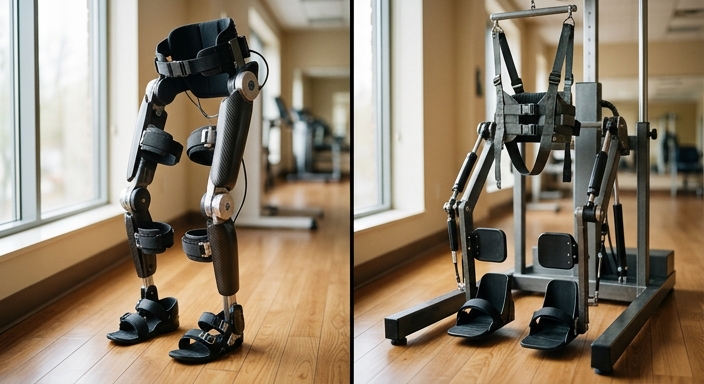
Exoskeletons vs. End-Effector Systems
Rehabilitation robots generally fall into two architectural categories: exoskeletons and end-effectors. Understanding the difference is the first step in making an informed selection.
Exoskeletons: These are wearable robotic "suits" that have joints corresponding to the human body (hips, knees, ankles). They provide direct control over the trajectory of each individual joint. They are excellent for patients who require total assistance or specific gait corrections at the knee or hip.
End-Effector Systems: Unlike exoskeletons, end-effectors only connect to the patient at the distal part of the limb—usually the feet. The machine moves the feet to simulate a walking pattern, and the knees and hips follow naturally. These systems are often easier to set up and allow for more natural variability in movement, which can be beneficial for late-stage recovery.
Stationary Gait Trainers vs. Overground Robots
The environment in which the robot operates is equally important. Robots are categorized based on their mobility:
- Stationary Systems: These are usually large, treadmill-based systems (like the Lokomat). They offer high levels of body-weight support and are ideal for early-stage recovery when the patient cannot support their own weight or maintain balance.
- Overground Robots: These allow the patient to move across a real floor. Devices like the EksoNR or ReWalk fall into this category. Overground training is more cognitively demanding and provides better "real-world" feedback, making it superior for functional integration as the patient progresses.
Key Selection Criteria: What to Look For
When evaluating a rehabilitation robot for a clinic or personal use, several technical specifications must be scrutinized:
- Degree of Autonomy: Does the robot provide "assistance-as-needed," or is it a fixed trajectory? The best robots adapt to the patient's effort.
- Adjustability: Can the device be quickly resized for different users? For clinics, a quick "setup time" is essential for throughput.
- Data Analytics: Does the robot provide real-time feedback on gait symmetry, force production, and range of motion? Data-driven recovery is the gold standard.
- Weight Support: Does it include a dynamic body-weight support system that mimics natural vertical movement during walking?
The Importance of Clinical Evidence
Not all robots are created equal in the eyes of science. Before selecting a device, review the peer-reviewed literature associated with that specific model. Look for studies focusing on "Neuroplasticity" and "Functional Independence Measure (FIM)" scores.
A robot backed by multiple clinical trials demonstrating improvements in walking speed and distance is a safer investment than a new, unproven prototype. Furthermore, check if the device is FDA-cleared or CE-marked for the specific level of injury (e.g., C7 vs T12).
Patient-Centric Factors and Compatibility
The patient's physical condition often dictates the robot selection. Factors include:
- Level of Injury: High cervical injuries may require robots with more robust trunk support and integrated head controls.
- Spasticity: Some robots handle muscle spasms better than others. High-torque motors with sensitive "spasm detection" software are critical for safety.
- Bone Health: For chronic SCI patients, the robot must be used in conjunction with a bone density monitoring program to prevent fractures during standing.
The Future of Spinal Cord Injury Robotics
We are moving toward a future of "Hybrid Robotics." This involves combining robotic exoskeletons with Functional Electrical Stimulation (FES). By stimulating the muscles while the robot provides the movement, clinicians can achieve even higher levels of muscle activation and cardiovascular demand.
AI-driven algorithms are also becoming standard. These allow the robot to learn the patient's unique movement quirks and provide corrective forces only when the patient deviates from a healthy gait pattern, maximizing the learning effect.
Frequently Asked Questions
How many hours of robotic therapy are needed for SCI recovery?
While it varies, most protocols suggest 3-5 sessions per week for at least 8-12 weeks to see significant neurological changes.
Is robotic rehab covered by insurance?
In many cases, clinical robotic therapy is covered under standard physical therapy codes, but the purchase of a personal home exoskeleton often requires a complex appeals process or private funding.
Can robots help with upper-body SCI recovery?
Yes, there are specific upper-limb robots (like the ArmeoSpring) designed specifically for reaching and grasping exercises for patients with cervical injuries.