The Complete Free Guide to Powered Exoskeletons for Pediatric Rehabilitation
Jump to Section
- Understanding Pediatric Powered Exoskeletons
- The Core Benefits of Robotic Rehabilitation for Children
- Clinical Indications: Who Is This For?
- How the Technology Works: Active vs. Passive Support
- Clinical Outcomes and Research Evidence
- Challenges in Pediatric Implementation
- The Future of Pediatric Mobility
- Frequently Asked Questions
Understanding Pediatric Powered Exoskeletons
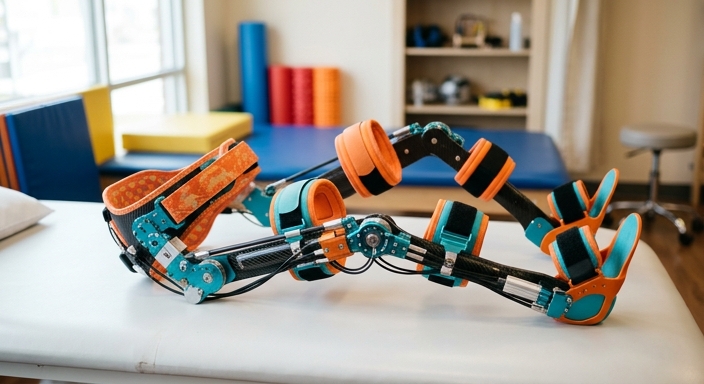
Pediatric powered exoskeletons represent a paradigm shift in how we approach childhood mobility impairments. Unlike traditional orthotics, which provide static support, these wearable robotic devices use motors, sensors, and sophisticated algorithms to actively assist or even initiate lower-limb movement.
For a child living with a neurological condition, the primary goal is neuroplasticity. The developing brain is remarkably adaptable, and powered exoskeletons leverage this by providing "high-dose" gait training—repetitive, correct walking patterns that the child could not achieve independently. This technology is not merely a mobility aid; it is a therapeutic tool designed to rewire the neural pathways responsible for locomotion.
The Core Benefits of Robotic Rehabilitation for Children
The advantages of integrating robotics into pediatric physical therapy extend beyond simple walking assistance. When a child is placed in a powered suit, they experience the world from an upright perspective, which has profound psychological and physiological effects.
- Neuroplasticity: By facilitating thousands of correct steps in a single session, these devices promote the reorganization of the central nervous system.
- Secondary Health Improvements: Regular weight-bearing activity through exoskeleton use helps improve bone density, bowel and bladder function, and cardiovascular health.
- Social and Emotional Impact: Standing at eye-level with peers can significantly boost a child's confidence and social engagement.
- Reduced Therapist Burden: Manual gait training is physically demanding for therapists. Exoskeletons allow for longer, more consistent sessions without physical fatigue.
Clinical Indications: Who Is This For?
Pediatric exoskeletons are designed for children with a wide range of neuromuscular disorders. While each device has specific clearance for height and weight, the general clinical indications include:
Cerebral Palsy (CP): CP is the most common cause of motor disability in childhood. Robotic assistance helps address spasticity and improves the gait cycle for children across different GMFCS levels.
Spinal Cord Injury (SCI): Whether the injury is traumatic or congenital (such as Spina Bifida), exoskeletons provide the necessary power to facilitate standing and walking when muscle function is absent.
Muscular Dystrophy: In early stages, exoskeletons can help prolong the ability to walk and maintain muscle flexibility, though use cases must be carefully managed to avoid over-exertion.
Traumatic Brain Injury (TBI): During the recovery phase, robotic gait training can accelerate the retraining of motor skills and improve balance and coordination.
How the Technology Works: Active vs. Passive Support
To understand pediatric devices, one must distinguish between the various levels of robotic assistance. Most modern systems utilized in rehabilitation are "Active" systems.
Active Exoskeletons: These contain onboard batteries and motors at the hip and knee joints. They use sensors to detect the child’s intent to move or provide a pre-programmed gait pattern. Some advanced models offer "assist-as-needed" software, which reduces robotic support as the child's own strength improves.
Overground vs. Treadmill-Based: Some systems, like the Lokomat, are stationary and used on a treadmill. Others, like the Trexo Robotics or various pediatric versions of the Indego, allow for "overground" walking. Overground systems are often preferred for social integration and real-world environmental training.
Clinical Outcomes and Research Evidence
The research surrounding pediatric robotic gait training is rapidly evolving. Recent clinical trials have shown that children using powered exoskeletons show measurable improvements in their 6-minute walk test (6MWT) results and overall gross motor function.
A key finding in many studies is that the benefits of exoskeleton training "carry over" to unassisted walking. This is the ultimate goal: the robot is a trainer, not a permanent crutch. By practicing the correct kinematic patterns, the child's body begins to internalize the mechanics of a healthy gait, leading to improved stability and speed even when the device is removed.
Challenges in Pediatric Implementation
Despite the promise, several hurdles remain for widespread adoption. The most significant is Growth. Children grow rapidly, necessitating devices that are highly adjustable or modular to ensure proper joint alignment over time.
Cost and Access: These devices are expensive, often costing tens of thousands of dollars. Currently, they are primarily found in specialized rehabilitation hospitals. Insurance coverage for home-use pediatric exoskeletons is still in its infancy, though advocacy groups are working to change this.
Cognitive Engagement: For the therapy to be effective, the child must be engaged. Manufacturers are increasingly integrating gamification and VR elements to keep young users motivated during repetitive training sessions.
The Future of Pediatric Mobility
We are moving toward a future where "soft" exoskeletons (exosuits) may become more prevalent. These use cable-driven actuators and lightweight textiles rather than rigid metal frames, making them more comfortable for all-day wear at school or home.
Furthermore, AI-driven adaptive software will soon allow these suits to learn a child's unique movement quirks and provide personalized assistance in real-time, effectively becoming an extension of the child's own body.
Frequently Asked Questions
Most pediatric exoskeletons are designed for children starting around age 2 to 3, depending on their height and weight. The key factor is the child’s ability to fit securely into the device’s frame and follow basic instructions.
Currently, most pediatric exoskeletons are used as therapeutic tools rather than primary mobility devices. However, for some children, they can be used for functional mobility during specific parts of the day.
A typical session lasts between 30 to 60 minutes. This includes the "donning and doffing" (putting on and taking off) of the device, with active walking time usually making up 20-40 minutes of the session.